







































1 Introduction and Management Summary
Blockchain seems to be one of the most important basic technologies of emerging business models, and a countless number of entrepreneurial initiatives covering it have been started in the recent past.
For many of relevant challenges in Information Stewardship today, blockchain technology seems to a promising solution. Obstacles are regulatory compliance and scalability, real time etc., but the technology is getting mature more and more through growing acquirement and adoption of proof-of-concepts.
This report provides insights and a closer look on how blockchain technology is most probably chaining the current state of the art in Information Stewardship, what is discussed in chapter 2 und 4. This advisory note highlights the most relevant properties, challenges and the changed management processes of Information and its information centered security processes to be expected from this emerging technology using derived blockchain usage patterns.
Briefly reflecting blockchain functionality of encrypted ledger and its distribution in multiple copies to enhance data integrity, the first generalized usage patterns of blockchains are:
- “reliable registry of digital identities” - “digital notary”
- “distributed attributes/rules of IDs” - “digital referee”
- “distributed control of attributes/rules – “digital court or law”
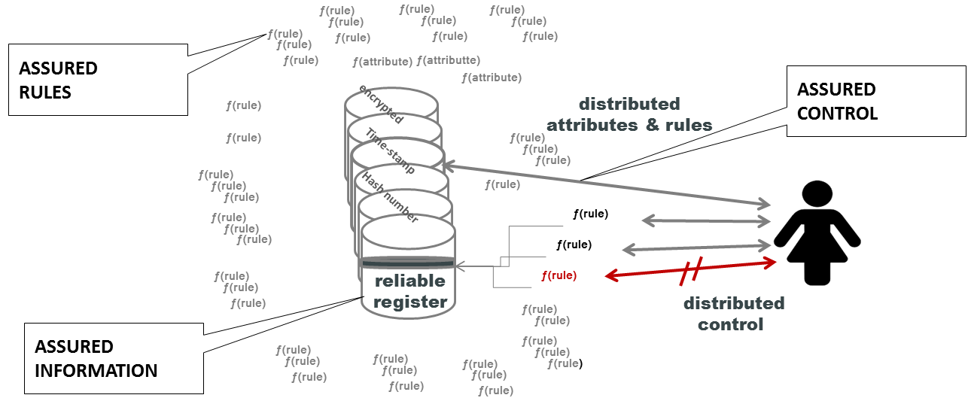
Further explained they can assist in the theoretical and practical development and acquisition of current and future blockchain-enabled business models in general and therefor for business cases in information stewardship, too.
A actual simplified and not scientifically proven assessment of these Usage Patterns maturity and scope may look as follows:
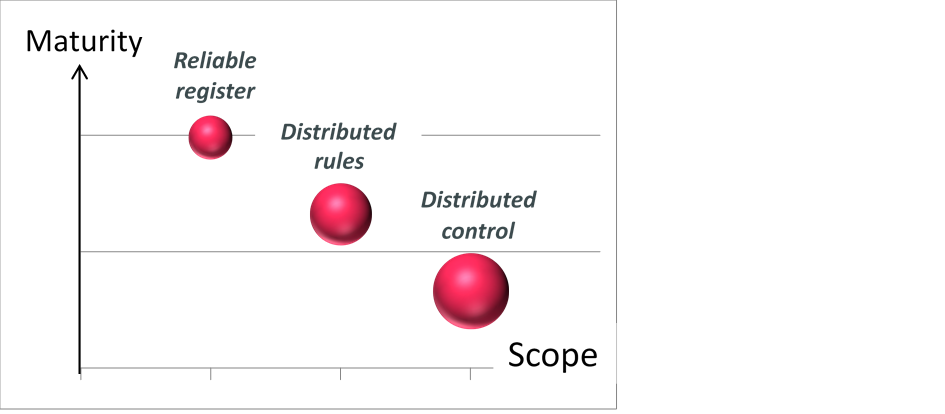
This report uses these patterns to argue on opportunities and challenges for Information Stewardship.
KuppingerCole recommends that organizations should:
- Learn about blockchain technology, the existing alternatives and educate their staff on this.
- Prototype relevant and potentially profitable solutions exploiting blockchain to learn and gain experience.
- Take special care to develop and calculate business cases that include blockchain solutions risks as well as their benefits, to work on the most promising ones
- and choose the blockchain variant out of the existing ones which might be best suited to support the selected business case.


